
Is there a Difference Between AHK-Cu vs GHK-Cu New Zealand? Peptides are essential in modern research, particularly regarding their potential

Yes, Cartalax Bioregulator shows potential in arthritis research by targeting pathways involved in joint damage. Research shows that Cartalax affects cartilage cell function, supports the structure around joints, and controls inflammatory signals linked to cartilage breakdown. These actions connect directly to arthritis progression.
Studies indicate that Cartalax demonstrates these effects in laboratory settings that focus on cartilage health and joint strength. These findings position Cartalax Bioregulator as a research peptide used to study cartilage support and inflammation pathways related to arthritis.
Understanding overall potential sets the foundation, but arthritis advances through physical changes inside the joint. To understand that progression, joint degeneration must be addressed directly.
Explore Cartalax Bioregulator from Direct Peptides New Zealand, a regulatory peptide examined for cartilage structure, joint tissue integrity, and inflammation-related pathways.

Cartalax Bioregulator works at the cellular level to influence processes tied to arthritis-driven joint degeneration. Cartalax is a short-chain peptide that influences cartilage cell signaling and protein synthesis pathways in chondrocytes, the primary cells in joint cartilage. In controlled experiments, Cartalax improved extracellular matrix organization and supported cartilage cell activity under stress, both key factors in slowing cartilage breakdown linked to arthritis pathways.
In preclinical studies of connective tissue and cartilage degeneration, Cartalax also engages molecular pathways that help stabilize the balance of structural proteins and reduce signals that accelerate joint tissue weakening. These effects position Cartalax as a primary peptide for studying joint degeneration mechanisms in arthritis research.
Degeneration rarely occurs alone. Inflammatory processes often accelerate tissue damage, making inflammation a central driver of arthritis progression.
Explore Peptide Supplies at Direct Peptides New Zealand for all your reconstitution requirements.
This signaling process accelerates cartilage breakdown by activating enzymes that degrade the cartilage matrix and disrupt normal cartilage cell balance. As inflammatory signals persist, cellular stress increases, tissue stability declines, and joint degeneration progresses more rapidly.
Consequently, Cartalax aids arthritis research by allowing scientists to examine how cartilage cells respond to inflammatory stress. Its role in cellular signaling and matrix regulation helps clarify how inflammation drives joint damage at the molecular level.
As inflammation continues, it reshapes cartilage structure itself, shifting attention from signaling to physical tissue breakdown.

During arthritis progression, the extracellular matrix gradually breaks down as cartilage cells lose balance between matrix repair and degradation. Collagen fibers weaken, proteoglycan levels decline, and cartilage becomes less able to absorb mechanical stress. This structural loss reduces joint cushioning, leading to stiffness, decreased mobility, and ongoing joint damage.
Research on cartilage degeneration often examines regulatory pathways that control matrix turnover, where the peptide Cartalax appears in broader discussions of gene regulation and tissue structure. This context helps explain how shifts in collagen and proteoglycan organization contribute to extracellular matrix deterioration as arthritis progresses.
Cartilage structure represents one dimension of arthritis research. Other biological systems, including inflammation and immune activity, also shape disease progression.

Arthritis research also examines other peptides alongside Cartalax Bioregulator to better understand joint damage. Alongside Cartalax, ARA-290 plays a vital role in studies that focus on inflammation and tissue stress, both of which contribute to arthritis-related joint degradation.
Thymosin Alpha-1 appears in research that examines immune activity and long-term inflammation in arthritis models. Researchers include this peptide when studying how immune signals increase joint inflammation and contribute to ongoing tissue damage.
Because each peptide acts through a different pathway, examining them individually provides clearer insight.
Shop ARA-290 from Direct Peptides New Zealand, a peptide studied for inflammatory signaling, tissue stress responses, and nerve-related pathways linked to joint damage.
ARA-290 supports arthritis research by targeting inflammatory signaling and tissue stress pathways linked to joint damage. Research shows that ARA-290 activates repair-related signaling that reduces pro-inflammatory activity and limits cellular stress. These actions matter because chronic inflammation and tissue stress drive cartilage damage and joint degeneration in arthritis.
In research models, ARA-290 also demonstrates tissue-protective behavior by helping cells respond to injury signals more effectively. By reducing harmful inflammatory responses and supporting repair pathways, ARA-290 helps researchers study how inflammation control affects arthritis-related joint damage.
Inflammation often overlaps with immune system activity, which brings immune-focused peptides into the discussion.
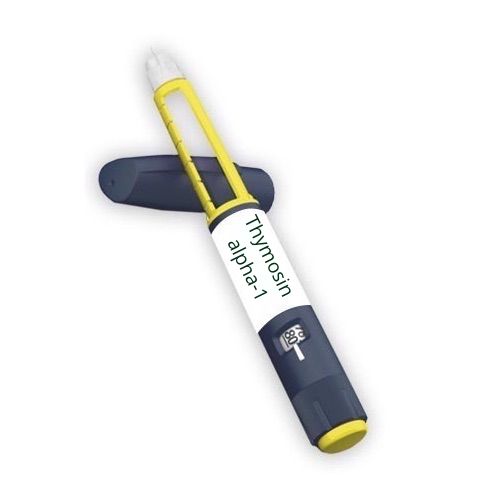
Thymosin Alpha-1 plays a role in arthritis research by regulating immune activity linked to joint inflammation. Immune signaling influences the onset and persistence of arthritis-related inflammation, and Thymosin Alpha-1 connects to pathways that help balance immune responses. Chronic immune activity accelerates joint tissue damage over time.
Research models also link Thymosin Alpha-1 to inflammation control and immune signaling that affect joint health. By regulating immune cell behavior during long-term inflammation, Thymosin Alpha-1 remains relevant in studies focused on immune-driven joint changes in arthritis.
With each peptide examined on its own, a side-by-side comparison helps clarify their differences.
Checkout Thymosin Alpha-1 from Direct Peptides New Zealand, a peptide associated with immune regulation and inflammatory signaling relevant to joint and connective tissue biology.
These peptides are often mentioned together, but they work in different ways. The table below breaks down their main differences.
| Cartalax Bioregulator | ARA-290 | Thymosin Alpha-1 |
|---|---|---|
| Cartilage integrity and matrix balance | Inflammatory signaling and tissue stress | Immune regulation and chronic inflammation |
| Joint degeneration and cartilage structure | Inflammation-related tissue damage | Immune-driven joint inflammation |
| Cartilage-focused research pathways | Repair-related inflammatory pathways | Immune response modulation |
The future of Cartalax Bioregulator in arthritis research looks promising as studies continue to focus on cartilage cells, extracellular matrix balance, and joint degeneration pathways. Its relevance centers on understanding how cartilage structure changes and how joint tissue responds during arthritis progression.
Alongside Cartalax, peptides such as ARA-290 and Thymosin Alpha-1 add important context by addressing inflammatory signaling and immune-driven pathways. Together, these peptides support a broader research approach that examines cartilage integrity, inflammation, and immune activity to deepen understanding of arthritis at the molecular level.
[1] Liao HJ, Chen HT, Chang CH. Peptides for Targeting Chondrogenic Induction and Cartilage Regeneration in Osteoarthritis. Cartilage. 2024 Sep 18:19476035241276406.
[2] Batarfi WA, Yunus MHM, Hamid AA, Maarof M, et al. Breaking Down Osteoarthritis: Exploring Inflammatory and Mechanical Signaling Pathways. Life (Basel). 2025 Aug 4;15(8):1238.
[3] Brines M, Dunne AN, van Velzen M, Proto PL, et al. ARA 290, a nonerythropoietic peptide engineered from erythropoietin, improves metabolic control and neuropathic symptoms in patients with type 2 diabetes. Mol Med. 2015 Mar 13;20(1):658-66.
[4] Dominari A, Hathaway Iii D, Pandav K, Matos W, et al. Thymosin alpha 1: A comprehensive review of the literature. World J Virol. 2020 Dec 15;9(5):67-78.
Shop ALL Peptide Vials from Direct Peptides New Zealand today, your trusted supplier of premium clinical grade peptides online.

Cartalax Peptide Vial
Price range: £41.50 through £50.48 Select options This product has multiple variants. The options may be chosen on the product page
New Reduced Price
New Reduced Price
New Reduced Price
New Reduced Price
Thymosin Alpha1 Pre-Mixed Pen 10mg Peptide
Price range: £58.83 through £158.84 Select options This product has multiple variants. The options may be chosen on the product page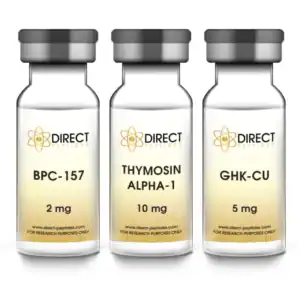
BPC-157 Thymosin Alpha-1 GHK-Cu Stack
Original price was: £82.71.£74.43Current price is: £74.43. Add to cart
ARA290 Peptide Vial
Price range: £8.33 through £17.31 Select options This product has multiple variants. The options may be chosen on the product pageIs there a Difference Between AHK-Cu vs GHK-Cu New Zealand? Peptides are essential in modern research, particularly regarding their potential

Cartalax vs BPC-157: How Do They Compare for Inflammation Relief? When comparing Cartalax vs BPC-157, researchers examine how each peptide

Benefits of HCG For Men New Zealand Exploring the Benefits of HCG for Men New Zealand Human Chorionic Gonadotropin (HCG)

What Are the Best Peptides for Hair Growth New Zealand? Hair loss is a widespread issue, leading many to explore